
Why Slowing Down Isn't Falling Behind
Article by Sue - Holistic Healer Earth Walk Therapies
There always seems to be something else to do.
Another email to answer. Another job around the house. Another person who needs something. Another appointment. Another commitment.
And somewhere amongst all of that, we can begin to feel as though slowing down simply isn't an option. We tell ourselves we'll rest when everything is finished.
But everything is rarely finished.
Modern life can create an almost constant sense of movement. We become accustomed to rushing from one thing to another, filling every spare moment and measuring our days by how much we've managed to accomplish. Sometimes, even when we finally have an opportunity to stop, we don't quite know how. Our bodies might be sitting still while our minds are already thinking about the next five things on the list.
At Earth Walk Therapies, I believe slowing down isn't about withdrawing from life.
Sometimes it is about creating enough space to actually experience it.

Why Does Slowing Down Feel So Difficult?
For many of us, being busy has become normal. We have responsibilities. Families. Work. Businesses. Homes. Relationships. Financial pressures. Phones that keep us permanently connected. There is always something competing for our attention.
Over time, it can become difficult to distinguish between what genuinely needs our attention and what we've simply become accustomed to doing.
There can also be an emotional side to busyness. Slowing down can sometimes bring guilt.
You might find yourself thinking:
I should be doing something.
I don't have time for this.
I'll relax when I've caught up.
Other people manage more than I do.
And perhaps the most powerful one:
I'm falling behind.
But wellbeing isn't a race. There isn't a finishing line somewhere ahead of you that everyone else is reaching first.
Sometimes slowing down is exactly what gives you the clarity and energy to decide where you actually want to go.
Slowing Down Is Not the Same as Doing Nothing
Slowing down doesn't necessarily mean stopping everything. It might simply mean doing something with greater awareness.
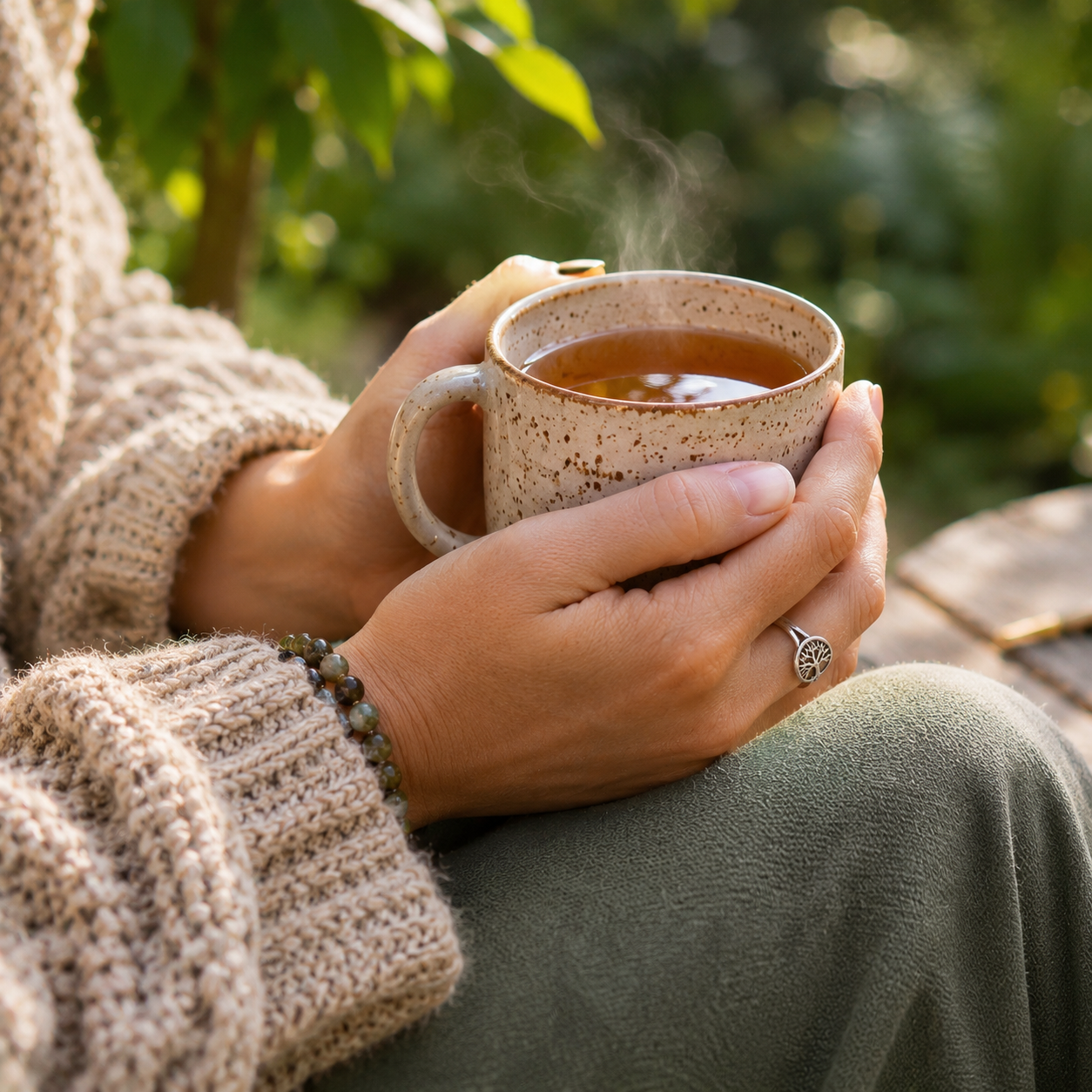
Drinking your morning tea without looking at your phone. Taking a few slow breaths before walking into work. Going outside for ten minutes.
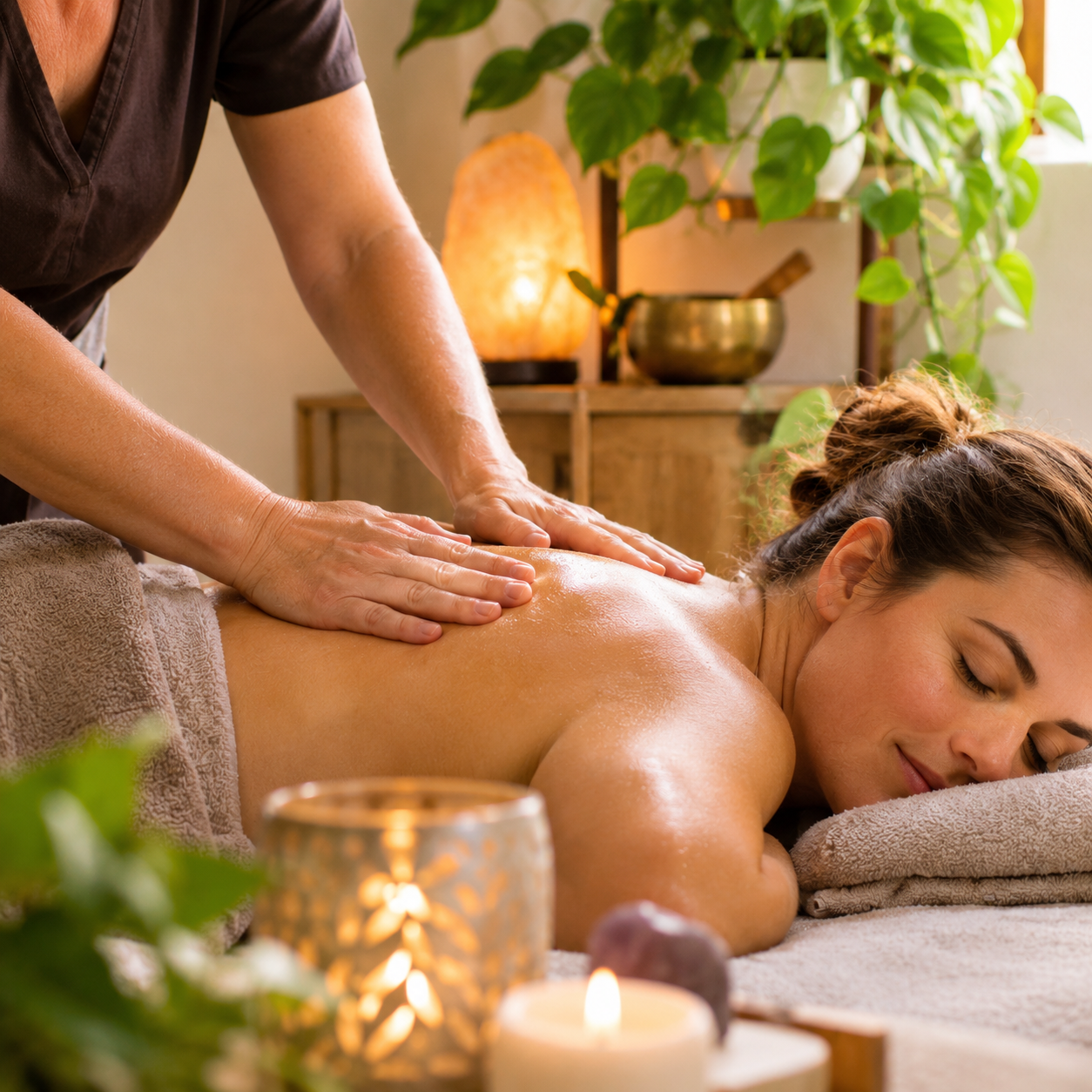
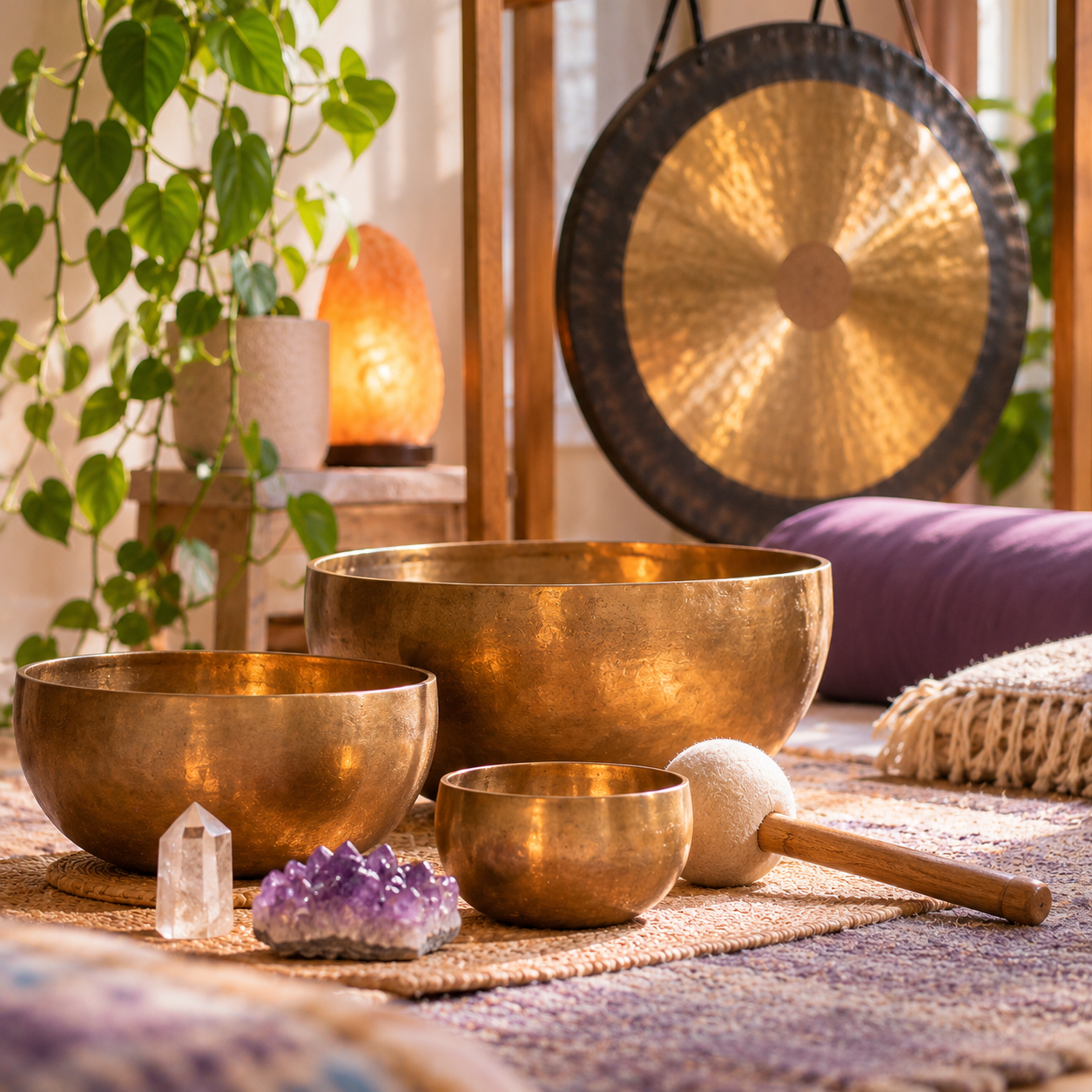
Having a massage without mentally planning tomorrow. Sitting quietly after a sound healing session and noticing how your body feels.
Taking a walk without needing to turn it into exercise. Sometimes slowing down means deliberately creating a little space between one thing and the next.
That space can be valuable.
The World Health Organization describes stress as a natural human response to challenging situations, while also recognising that too much stress can affect both physical and mental wellbeing. Stress can make relaxation difficult and may be associated with problems such as difficulty concentrating,
irritability and disturbed sleep. World Health Organization
The aim, therefore, isn't to remove every demand or challenge from life.
That's rarely realistic.
Instead, we can begin creating moments in which we aren't constantly responding to those demands.
What Happens When We Never Give Ourselves Space to Pause?
One of the things I love about holistic wellbeing is that it doesn't always begin by asking:
"What's wrong?"
Sometimes a much gentler question is:
"What do I need right now?"
Your answer might change from day to day.
You might need quiet.
Movement.
Rest.
Connection.
Space.
Touch.
Breath.
Nature.
A conversation.
Or simply an hour when nobody needs anything from you. This is one reason slowing down can be so valuable. It gives you an opportunity to listen.
And that listening doesn't always need to be intellectual. Sometimes your body tells you before your mind does.
You notice yourself taking a deeper breath.
Your shoulders soften.
Your jaw unclenches.
You realise how tired you actually are.
Or you suddenly recognise that you've been carrying something emotionally that needs attention. The purpose isn't to analyse every sensation.
It's simply to become a little more present with yourself.
Slowing down can create opportunities for something that busyness often removes: awareness.
When you're constantly moving, it can be difficult to notice what you're feeling. When you create space, you may begin noticing things you have been pushing aside. Perhaps your shoulders have been tight for weeks. Perhaps you're exhausted. Perhaps your breathing has become shallow. Perhaps something has been bothering you emotionally. Or perhaps you simply haven't had a quiet moment to yourself for a very long time.
Relaxation practices can provide one pathway into that quieter state.
Healthdirect Australia notes that stress can lead to fast, shallow breathing and that slowing the breath may help people feel calmer and less tense. It also describes mindfulness as focusing calmly on the present moment rather than becoming caught in stressful thoughts.
These don't have to become complicated practices.
Sometimes awareness itself is the beginning.
One of the difficulties with constant busyness is that eventually it can simply feel normal.
You wake up thinking about what needs to be done.
You move through your day reacting to whatever comes next.
You finally sit down at night and realise your mind is still racing.
Then you wake up and begin again.
We can become so familiar with tension that we don't notice we're carrying it. We can become so accustomed to being tired that tired starts feeling normal.
And we can become so busy looking after everything around us that we stop checking in with ourselves.
That doesn't mean every busy period is harmful.
Life naturally moves through seasons. Sometimes there genuinely is a lot happening. The question is whether we ever allow ourselves to come back down again. WHO notes that learning ways to cope with stress can support both mental and physical wellbeing.
The Benefits of Slowing Down
Slowing Down Helps You Notice What You Need
You Don't Have to Earn Rest
This can be one of the hardest ideas to accept. Many of us treat rest as a reward. We tell ourselves we can stop after we've finished everything.
But when the list never ends, neither does the waiting. Rest doesn't have to be something you earn by reaching exhaustion first.
You can make space before you're completely depleted. You can book the massage before your shoulders are screaming at you. You can take the quiet afternoon before you feel overwhelmed. You can practise breathing before life becomes too much. You can create moments of stillness simply because they feel good.
Wellbeing itself is multidimensional. The Australian Institute of Health and Welfare describes wellbeing as involving interconnected
areas including health, work, social connection, participation and broader quality of life.
Looking after yourself isn't separate from living your life.
It's part of it.
Simple Ways to Create More Space in Everyday Life
Slowing down doesn't require disappearing to a retreat for a week. Beautiful as that might sound. Small moments matter too.
Try creating a few minutes between activities rather than immediately reaching for your phone.
Take three slower breaths before getting out of the car. Walk outside and feel your feet on the ground. Sit somewhere without needing entertainment.
Have your coffee without scrolling. Listen to music with your eyes closed. Spend time in the garden. Take a slower shower.
Allow yourself to arrive somewhere five minutes early instead of racing through the door.
Choose one evening where nothing productive needs to happen. None of these things are revolutionary. That's precisely the point.
Slowing down can become something woven into everyday life rather than another task you have to perform perfectly.
WHO's Doing What Matters in Times of Stress similarly focuses on practical stress-management skills that can be practised for just a few minutes each day.
The goal isn't to become perfect at relaxing. It's simply to create more opportunities for it.
How Holistic Therapies Can Help You Slow Down
Sometimes slowing down by ourselves is difficult. We might understand intellectually that we need rest but still struggle to switch off.
This is where creating a dedicated space for yourself can be helpful. At Earth Walk Therapies in Beaudesert,
different holistic therapies provide different pathways into that experience.
Massage can provide time away from everyday demands while supporting physical relaxation and body awareness.
Reiki offers a quiet, gentle experience where you can rest without needing to achieve or perform anything.
Reflexology creates dedicated time to settle, receive and reconnect with yourself.
Sound healing and sound baths can provide an immersive experience where attention is drawn away from everyday
mental noise and into sound, vibration and the present moment.
Breathwork can help bring greater awareness to breathing and provide structured space to reconnect with yourself.
Shamanic healing provides another pathway for people drawn towards deeper reflection, connection and traditional spiritual practices.
These approaches are different.
That's important.
Holistic wellbeing isn't about finding the single therapy everybody "should" be doing.
It's about discovering what feels supportive for you.
Finding the Therapy That Feels Right for You
Some days you might need massage. Another day you might want the stillness of Reiki. Perhaps sound is what allows you to finally stop thinking about everything waiting outside the room. Perhaps breathwork helps you become more present. Perhaps you are drawn to reflexology, Shamanic healing or a combination of therapies. Your needs can change.
That's why treatments at Earth Walk Therapies don't have to begin with a predetermined idea of what wellbeing should look like.
They can begin with you.
Where are you today?
What have you been carrying?
How are you feeling?
What would it feel like to give yourself some space?
Those questions can be more valuable than trying to squeeze another wellbeing task onto an already crowded list.
Making Space for Yourself at Earth Walk Therapies
The treatment space and studio at Earth Walk Therapies in Beaudesert has been created with slowing down in mind.
A place where, for a little while, you don't need to rush somewhere else.
You don't need to achieve anything.
You don't need to prove how productive you've been.
You can simply arrive.
Breathe.
Receive.
And give yourself permission to be where you are. Because slowing down isn't giving up. It isn't losing momentum. And it certainly isn't falling behind.
Sometimes slowing down is how we reconnect with ourselves enough to understand what really matters. And perhaps that's not falling behind at all.
Perhaps that's finding your way back to yourself.
Key Takeaways
Slowing down doesn't mean stopping. It can simply mean creating more awareness and space within everyday life.
Constant busyness can make it difficult to notice how you're actually feeling.
Rest doesn't have to be earned through exhaustion.
Small pauses can matter. A few quiet minutes, slower breaths or time outside can create valuable space.
Slowing down can help you recognise what you need physically and emotionally.
Different people relax in different ways. There is no single "correct" way to slow down.
Holistic therapies can provide dedicated space away from everyday demands.
Massage, Reiki, reflexology, sound healing, breathwork and Shamanic healing offer different pathways into relaxation, awareness and connection.
Looking after yourself isn't separate from living your life, it is part of it.
Sometimes slowing down isn't falling behind; it's how you reconnect with where you actually want to go.
Take the First Step
We invite you to join us for a healing session and discover why so many are calling it their favourite self-care ritual.
A gentle remembering…
to reconnect
to realign
and to fully
Embrace the Beauty of Your Earth Walk.
"Embrace the Beauty of your Earth Walk"
-
"Life can be full-on, and sometimes, you just need a reset."
-
"Make yourself a priority once in a while."
-
"Embrace the Beauty of your Earth Walk" - "Life can be full-on, and sometimes, you just need a reset." - "Make yourself a priority once in a while." -
Slowing Down in Every Day Life Frequently Asked Questions
-
Many of us have learned to associate being busy with being productive, responsible or successful. When we're constantly surrounded by messages about achieving more, it can begin to feel uncomfortable to do less.
That can make rest feel like something that needs to be earned.
You may tell yourself that you'll relax once the house is organised, the work is finished, everybody else is looked after or you've caught up with everything.
The problem is that there will nearly always be something else to do.
Creating time for yourself doesn't mean you're ignoring your responsibilities. It means recognising that your own wellbeing deserves a place amongst them.
It can help to start small. Rather than feeling as though you need an entire day of rest, begin with ten minutes outside, a quiet cup of tea, a few slower breaths or an appointment that gives you dedicated time away from everyday demands.
Over time, slowing down can become less about "doing nothing" and more about deliberately creating space for yourself.
-
There isn't one universal sign that tells everybody they need to slow down.
For some people, it appears physically. You may notice tension through your shoulders, neck or jaw, shallow breathing or difficulty relaxing.
For others, it's mental. Your thoughts may continually jump from one responsibility to another, even when you're supposed to be resting.
You might also notice that you're becoming more irritable, distracted or overwhelmed by things you would normally manage comfortably.
WHO notes that stress can make relaxation and concentration difficult and can be associated with irritability, headaches, body pain, digestive discomfort and sleep difficulties.
These experiences can have many possible causes, so persistent or concerning symptoms should be discussed with an appropriate healthcare professional.
But from a general wellbeing perspective, noticing that you rarely have genuine downtime can itself be useful information.
Sometimes the question isn't whether you've "earned" a break.
It's simply whether creating some space might help.
-
Slowing down and becoming unproductive aren't the same thing.
You can have a full, meaningful life while still creating periods where you're not constantly rushing.
In fact, one reason people explore practices such as mindfulness is to bring greater awareness to what is happening in the present moment. Healthdirect describes mindfulness as focusing on the present and calmly noticing your surroundings and how you feel rather than becoming caught in stressful thoughts.
Applied to everyday life, slowing down might mean taking a moment before responding, focusing properly on one task rather than five, or recognising when you're continuing something simply because you're used to being busy.
The goal isn't necessarily to do less.
It's to become more conscious about how you are doing it.
Sometimes that means continuing forward.
Sometimes it means resting.
And sometimes it means recognising that something you've been giving enormous amounts of energy to isn't actually important anymore.
-
There will be periods of life when reducing your responsibilities simply isn't realistic.
Children still need looking after. Businesses need running. Work needs completing. Families need support.
The idea isn't to pretend those responsibilities don't exist.
Instead, look for small spaces within the life you already have.
That might mean sitting in the car for two quiet minutes before walking into your next appointment.
It might mean leaving your phone behind while you make a cup of tea.
You might take several slower breaths before beginning work, step outside at lunchtime or deliberately create ten minutes between finishing one activity and beginning another.
WHO's stress-management resources emphasise practical skills that can be practised in only a few minutes each day.
Small pauses won't remove every source of stress.
But they can begin changing your relationship with constant busyness.
Rather than waiting for life to become quiet before allowing yourself to slow down, you begin creating little moments of quiet within the life you already have.
-
Breathing is something we do automatically, which means we often don't notice how it changes when we're busy or stressed.
Healthdirect notes that stress can lead to faster, shallower breathing and that intentionally slowing the breath may help you feel calmer and less tense.
This is one reason breath can be such an accessible starting point for slowing down.
You don't necessarily need special equipment, a particular environment or a large amount of time.
Sometimes simply pausing and noticing your breathing is enough to bring your attention back into the present moment.
More structured breathwork can explore breathing in greater depth and create dedicated time to focus on breath, awareness and your experience in the body.
At Earth Walk Therapies, breathwork is one of several approaches available to people exploring relaxation and holistic wellbeing.
As with any wellbeing practice, the experience is individual, and structured breathwork may not be suitable for everybody. Relevant health concerns should be discussed before participating.
-
The best approach depends on what slowing down looks like for you.
Some people find it easier to relax through the physical experience of massage.
Others enjoy the quietness of Reiki or reflexology.
Some find that sound healing helps shift their attention away from everyday thoughts by creating an immersive environment of sound and vibration.
Breathwork provides another pathway by bringing conscious attention to something we normally do automatically: breathing.
Shamanic healing may appeal to people seeking a more spiritual, reflective or traditional pathway.
The important point is that these therapies aren't interchangeable.
Each provides a different experience.
At Earth Walk Therapies in Beaudesert, the aim isn't to tell everybody that one therapy is the answer. Instead, different therapies can be explored individually or, where appropriate, combined to create an experience suited to the person.
Sometimes choosing a therapy begins with a very simple question:
What feels like it would support me right now?
-
When life becomes busy, much of our attention moves outward.
We're thinking about work, family, messages, appointments and what needs to happen next.
Massage creates a very different environment.
For the duration of the treatment, you aren't expected to accomplish anything.
You don't have to answer emails.
You don't have to organise anybody.
You can simply lie down and receive.
The physical experience of massage can also bring greater awareness to areas where you're holding tension.
Sometimes people don't realise how tight their shoulders, back, neck or jaw feel until they finally stop.
Massage isn't about escaping life permanently.
It can simply provide a deliberate interruption to constant activity.
That pause can become an opportunity to reconnect with your body and experience what it feels like to stop doing for a little while.
At Earth Walk Therapies, massage can also be incorporated alongside other holistic approaches where appropriate.
-
One reason switching off can be difficult is that sitting quietly doesn't automatically make the mind quiet.
You may lie down to relax and immediately start thinking about tomorrow.
Sound provides something else for your attention to rest upon.
During a sound healing experience or sound bath, different tones, vibrations and instruments create an environment where you can simply listen and experience.
There isn't necessarily anything you have to "do."
For people who find silent meditation difficult, this can offer another pathway into stillness and awareness.
Experiences vary considerably from person to person. Some people find sound deeply relaxing; others experience it primarily as an opportunity for reflection, mindfulness or simply time away from everyday stimulation.
At Earth Walk Therapies in Beaudesert, sound therapy forms part of a broader range of holistic practices designed to create space for rest, connection and personal wellbeing.
-
Slowing down doesn't have to happen according to a strict routine.
For one person, it might mean a few quiet minutes every morning.
Someone else may benefit from a longer period each week where they deliberately step away from responsibilities.
Another person might book regular massage, Reiki, reflexology, sound healing or another therapy because having that appointment encourages them to protect the time.
The important shift is moving away from the idea that you only deserve to stop once you're exhausted.
Regular small moments can be valuable too.
WHO's Doing What Matters in Times of Stress notes that its practical self-help techniques can be practised for just a few minutes each day.
Rather than asking, "How often am I supposed to relax?", a more useful question may be:
"Am I regularly giving myself any genuine space at all?"
If the answer is no, that's a good place to begin.
-
Earth Walk Therapies provides different pathways for people wanting to create more space for relaxation, awareness, connection and holistic wellbeing.
Available approaches include massage, Reiki, reflexology, sound therapy, sound baths, breathwork and Shamanic healing, along with workshops, events and experiences offered throughout the year.
Rather than approaching wellbeing as though everybody needs the same thing, treatments can provide different experiences depending on what you're drawn towards and what feels supportive at that point in your life.
The Beaudesert treatment space and studio has been created as somewhere you can step away from the pace of everyday life for a while and intentionally make time for yourself.
Whether that's through touch, sound, breath, energy work, reflection or simply having permission to stop, the starting point can be wonderfully simple:
Come as you are.